What Makes a Project Expensive?
When clients are contemplating a new web development project, the question we most often hear is “How much will it cost?” The answer is usually “That depends.” Many factors can make a project more or less expensive. Here are a few to keep in mind, courtesy of the Jazkarta team (especially David Glick.)
- How important is it to have a polished visual design? The more polished and refined, the more time and money will be spent.
- Does everything need to be perfectly customized for your organization? If you are open to compromises that allow things to work in ways that are simpler to build you could reduce costs.
- Is the functionality public-facing or internal? This can play into the previous two questions. In general it is easier to make compromises and keep expenses down on an internal site.
- Does the project focus on a single feature area or a bunch of loosely connected areas? How much variation is there within a feature? How standardized are your processes? More features and variations lead to more work and more expense. Standardizing on one way of doing things might save on both development budget and staff time.
- Is the functionality managed by a single part of the organization or does it require buy-in across the organization? It can be difficult to get a diverse group of stakeholders to agree, and their diverse opinions might cause the scope of the project to increase. Try to prevent surprise stakeholders with a lot of organizational clout from emerging late in the project and announcing significant “critical” changes. This can wreak havoc with budgets and demoralize project staff.
- Does the project require coordination between multiple teams? This will take time and is another path to potential scope creep.
- Can the project be built on one major platform, or does it require integrating multiple platforms? Each integration will increase expense.
- How much traffic is expected? Traffic determines how much effort needs to be put into scaling and optimizing the site.
- Are you building a tool tailor-made for your organization, or something that you aim to release for use by other organizations? Generalizing features often takes more time and makes writing automated tests more critical.
- Does the project require migrating data from an old system? This will add to costs in proportion to the complexity of the data.
- If the project involves updates to an existing system, how well-maintained is it? Poorly maintained systems are more difficult to work with.
Big web development projects are daunting and it can be hard to figure out your budget and stick to it. The two best tools for controlling costs are:
- A thorough discovery process with your technology partners, to figure out what exactly you need to build and how you’re going to build it.
- A flexible implementation process that lets you change your mind when you discover problems or opportunities – an “agile” as opposed to a “waterfall” process.
If you’d like to hear more and you’re coming to the Nonprofit Technology Conference in Washington DC this week, come hear Karen Uffelman (of Percolator Consulting), Loren Drummond (of Washington Trails Association) and me talk about a big project we did together to develop a volunteer management system. The session is called For the Love of Volunteers! How Do You Choose the Right Technology to Help Manage Them?
Hope to see you there!
Two Jazkarta Projects Competing for Digital Humanities Award
The annual Digital Humanities Awards allow the public to recognize outstanding digital humanities resources on the web. This year not one but two Jazkarta projects are nominated in the “Best Use of Digital Humanities for Public Engagement” category!
- Pleiades, a gazetteer of ancient places that recently won the Archaeological Institute of America’s 2017 Award for Outstanding Work in Digital Archaeology. It lets enthusiasts use, create, and share geographic information about the ancient world – associating locations with ancient places, names and scholarly references.
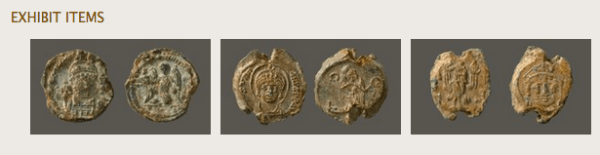
- Dumbarton Oaks’ Online Catalog of Byzantine Seals, which allows users to browse photographs and detailed information about the 17,000+ seals in the collection. Tools include a faceted search, bibliography, and “save my favorites” feature, as well as two informative online exhibitions.
Jazkarta helped develop the software that powers these sites – in both cases, custom add-ons for the Plone open source content management system. But the real work was done by the Pleiades and Byzantine Seals teams who conceived and designed these projects and did the heavy lifting of data entry and curation.
You can cast your vote for either of these projects – or for the National Endowment for the Humanities’ Office of Digital Humanities – by visiting dhawards.org/dhawards2016/voting/ and completing the voting form linked at the bottom before midnight this Saturday, 25 February.


 Jazkarta Blog